How to Plan a Multi-Location Signage Rollout
Estimated reading time: 6 minutes
- Consistency is key: Ensure all signage reflects your brand identity across locations.
- Local adaptation: Modify signage designs to fit local cultures while maintaining core brand elements.
- Compliance matters: Understand and adhere to local regulations to prevent installation delays.
- Effective materials: Choose durable, weather-resistant materials suited for Jacksonville’s climate.
- Marketing strategies: Promote new signage through social media and community events to boost visibility.
Table of Contents
- Understanding Your Brand Identity
- Conducting a Site Survey
- Designing Your Signage
- Choosing the Right Materials
- Managing Compliance and Permitting
- Planning the Installation
- Marketing and Promoting Your New Signage
- Evaluating the Impact of Your Signage
- Partnering With SignLabJax
- Conclusion
- FAQ
Understanding Your Brand Identity
Before launching into the logistics of a multi-location signage rollout, it’s crucial to understand your brand identity. This includes your brand colors, fonts, logos, and overall visual style. Your signage should evoke the same feeling across all locations to reinforce your brand recognition.
Key Considerations:
- Brand Guidelines: Develop comprehensive brand guidelines that clearly outline how your signage should look and feel. This will serve as a foundation for all signage design decisions.
- Local Nuances: Consider how your brand identity can adapt to fit local cultures while still retaining its core elements. Many Jacksonville businesses have found that small changes, like adding a native motif, can resonate with local customers, creating a deeper emotional connection.
Conducting a Site Survey
Once you have a clear understanding of your brand identity, the next step is conducting a site survey for each location. This essential process will determine the best placement for your signage based on visibility, foot traffic, and compliance requirements.
What to Look For:
- Visibility: Identify high-traffic areas where your signs will be most seen. Consider factors like distance from the road, angles of approach, and obstacles that might block viewability.
- Permitting Requirements: Certain areas in Jacksonville may have strict regulations regarding signage, so understanding local permitting processes early on is crucial to avoid delays.
- Local Competition: Assess the signage strategies of local competitors. This knowledge helps differentiate your signage while adhering to the standards of the area.
Designing Your Signage
Designing signage for multiple locations requires careful coordination to ensure consistency. Signage can take many forms, including outdoor signs, wayfinding signage, window graphics, and banners.
Tips for Effective Sign Design:
- Use Consistent Elements: Keep key visual elements, like colors and fonts, consistent across all designs. This reinforces brand cohesion.
- Adaptable Designs: Depending on local context, you may need to adapt certain design elements. This might mean changing the size or layout of a sign to fit different locations while keeping the core design intact.
- Reach Out for Feedback: Once designs are ready, share them with various stakeholders, including local managers, to ensure they resonate with the intended audience.
Choosing the Right Materials
The materials you choose for your signage will significantly affect its durability and overall aesthetics. Each location may present unique challenges, so selecting the right materials is essential.
Material Considerations:
- Durability: Southern Florida’s weather can be unpredictable; materials should withstand heat, humidity, and storms. High-quality vinyl, UV-resistant coatings, and weatherproof fixtures are recommended.
- Eco-Friendly Options: If sustainability is part of your brand’s identity, consider using eco-friendly materials in your signage designs.
- Lighting: For outdoor signs, consider illuminated options to boost visibility during night and low-light conditions. LED solutions are energy-efficient and long-lasting.
Managing Compliance and Permitting
Navigating the compliance landscape can be one of the trickiest parts of a multi-location signage rollout. Jacksonville has specific regulations governing sign size, location, and lighting.
Compliance Steps:
- Research Local Laws: Every city has its zoning laws regarding signage, so begin with comprehensive research on Jacksonville’s local requirements. This will help you avoid potential fines and setbacks.
- Submit Permits: Once you understand the regulations, you’ll need to submit permit applications. Engage with local authorities early in the process to expedite approvals.
- Compliance Checklists: Create a checklist for each location that includes required permits, design specifications, and local regulations. This ensures all teams are on the same page.
Planning the Installation
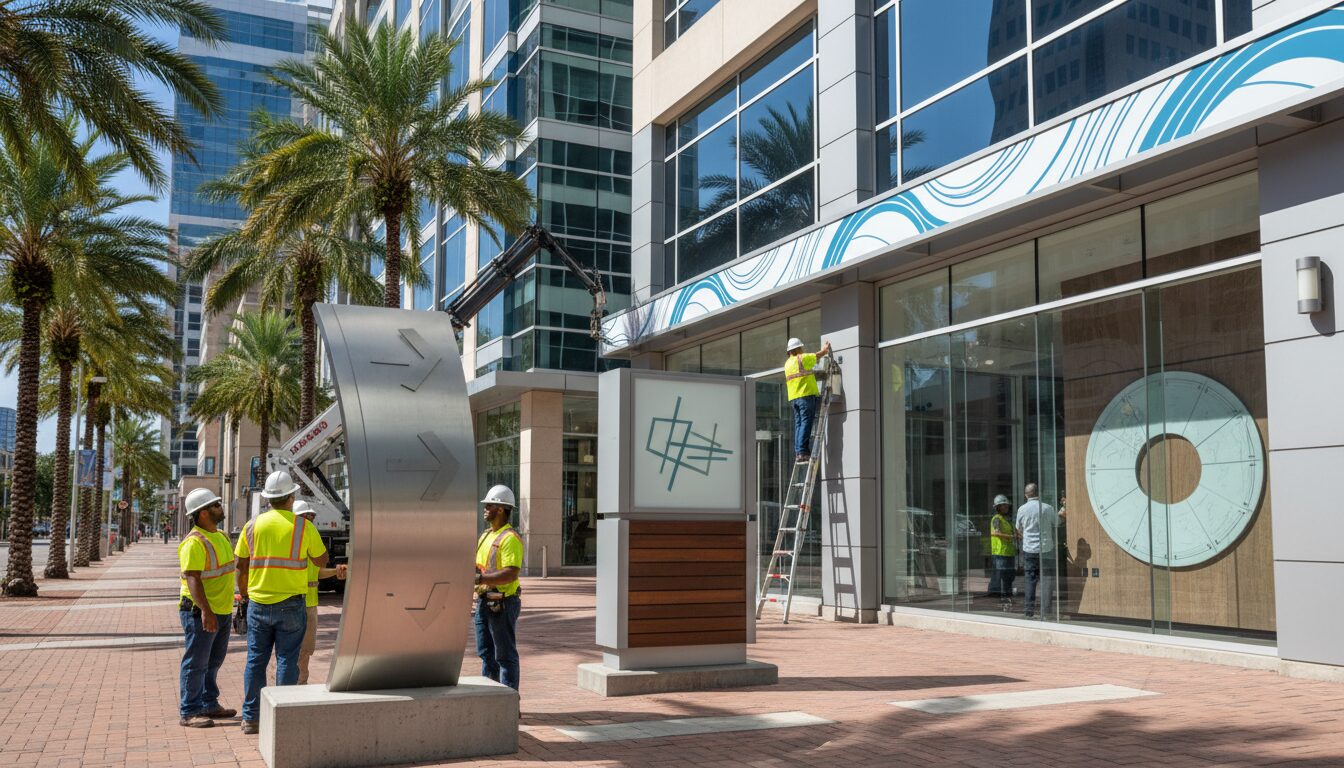
Once your designs are finalized and permits are in place, it’s time to plan the installation process. A meticulous approach can mitigate disruptions to your business operations.
Installation Considerations:
- Timeline: Establish a clear timeline for installations across all locations. This ensures that each site is addressed systematically without overlap.
- Contracting the Right Professionals: Engage with experienced signage installers who understand local requirements and have a reputation for quality work.
- Safety Protocols: Maintain safety standards during installation. This is particularly important when working in busy public spaces, as it protects both workers and the public.
Marketing and Promoting Your New Signage
Once your signage is installed, it’s time to let the world know about it! A well-executed marketing strategy can enhance visibility and engagement, driving more traffic to your locations.
Promotional Strategies:
- Leverage Social Media: Use your social media platforms to showcase your new signs. Encourage followers to visit and capture the signage in action, creating a sense of community engagement.
- Local Events: Host a launch event at each location, promoting the new signage while offering discounts or activities. This encourages foot traffic and customer interaction.
- Engage with Local Influencers: Invite local influencers to experience your brand and share it with their audiences. Their endorsement can further strengthen your visibility.
Evaluating the Impact of Your Signage
Following installation and promotion, it’s essential to evaluate the effectiveness of your signage. Consider collecting data on foot traffic, customer engagement, and sales before and after the rollout.
Evaluation Metrics:
- Foot Traffic Analysis: Use technology like heat maps or customer tracking to gauge the increase in foot traffic at each location.
- Sales Data: Compare sales data before and after the installation of the signage to measure impact.
- Customer Feedback: Gather customer opinions through surveys or social media interactions, which provide insight into how well your signage resonates with them.
Partnering With SignLabJax
At SignLabJax, we specialize in guiding businesses through the complex process of multi-location signage rollouts. From brand design to compliance, we have a team of experts committed to ensuring your signage is not only eye-catching but also compliant and effective. Many businesses in Jacksonville have successfully navigated their signage challenges with our tailored solutions, benefiting from our expertise in local regulations and installation logistics.
Conclusion
Planning a successful multi-location signage rollout involves thorough preparation, attention to detail, and strategic implementation. By understanding your brand, conducting in-depth site surveys, and adhering to local compliance, you can ensure a cohesive and impactful signage presence that strengthens your brand identity across multiple locations.
If your business is looking to enhance its visibility through a well-organized signage strategy, reach out to SignLabJax for a consultation. Our dedicated team will help you combine quality design with compliance to achieve your desired outcomes.
Looking to transform your brand presence?
Get in touch with SignLabJax and let’s plan your next signage project.
FAQ
What are the key considerations for designing multi-location signage?
Key considerations include maintaining brand consistency, understanding local cultural nuances, and ensuring designs adhere to local regulations.
How can I ensure my signage is compliant?
Research local zoning laws and submit necessary permits to local authorities before installation.
What materials are best for outdoor signage in Jacksonville?
Consider durable materials that withstand heat, humidity, and storms, such as high-quality vinyl and weatherproof fixtures.
How can I promote my new signage effectively?
Utilize social media engagement, host local launch events, and collaborate with local influencers to increase visibility.
What metrics should I track to evaluate signage effectiveness?
Key metrics include foot traffic analysis, sales data comparison, and customer feedback surveys.