A well-positioned, readable façade is one of the most efficient ways to increase discovery and strengthen street-level brand presence. Façade sign visibility isn’t just about having a sign—it’s about making your storefront understandable at a glance, legible from the approach, and inviting on arrival. This guide explains how placement, contrast, lighting, and durable materials work together to improve façade sign visibility in real-world conditions.
1) What “visibility” means for a façade
Façade sign visibility is a combination of three practical factors:
-
Sightline access: how the building face meets the street, sidewalks, parking aisles, and intersections.
-
Visual contrast: how well letters and logos stand out through color and typography choices.
-
Lighting performance: how clearly the sign reads across daylight, dusk, and nighttime ambient lighting.
Treat visibility as a system—if one factor is weak, the whole façade underperforms.
2) Positioning and sightlines
-
Face the approach: Place the primary identity sign on the façade plane most visible from the main approach routes (sidewalk paths, parking lanes, and nearby intersections).
-
Plan for “first glance” reading: Your name or core identifier should be readable quickly—customers often decide in seconds if they found the right place.
-
Balance height vs. distance: Choose letter height and layout based on expected viewing distance so readability improves as people approach.
-
Protect the primary ID zone: Keep the core sign area free from awnings, tree canopies, banners, or architectural clutter that interrupts sightlines.
-
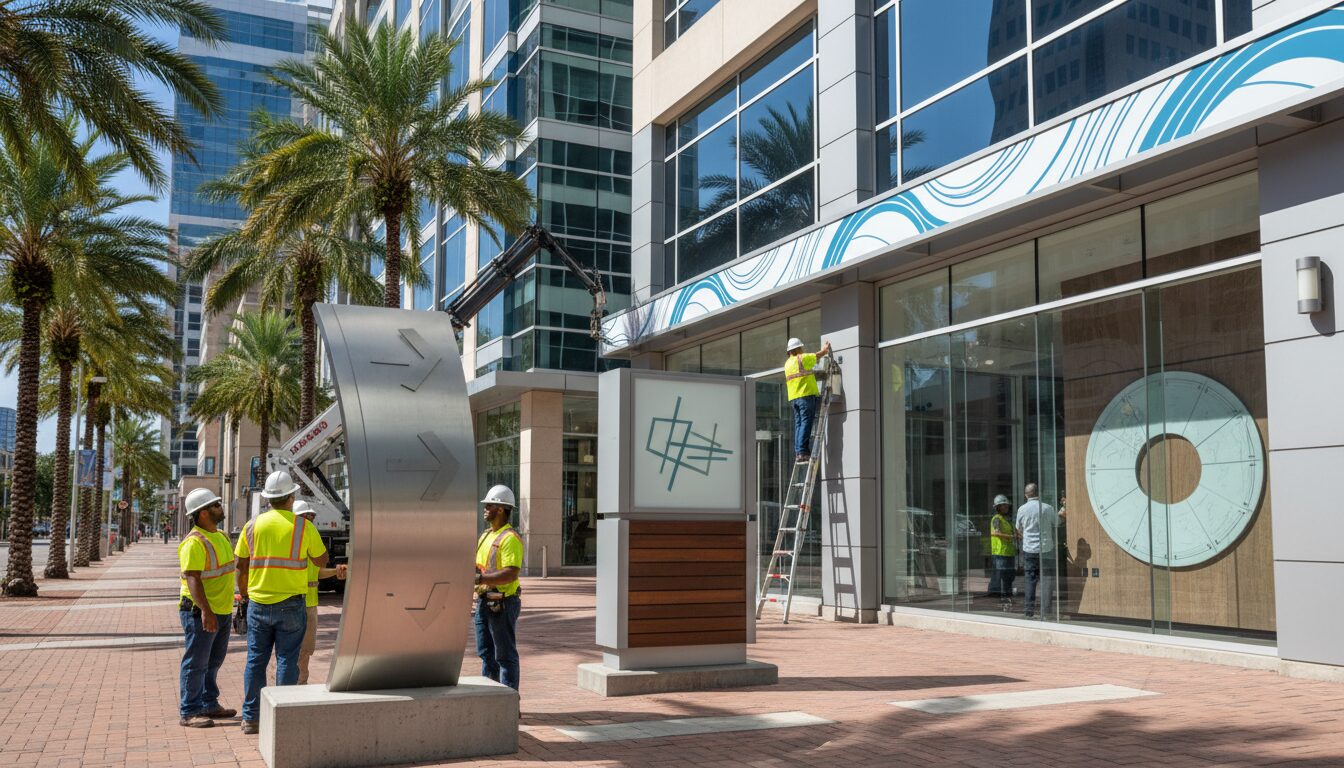
Support the entry: Use secondary wayfinding elements (door graphics, directional cues, suite markers) to make the entrance unmistakable.
3) Color, contrast, and typography
-
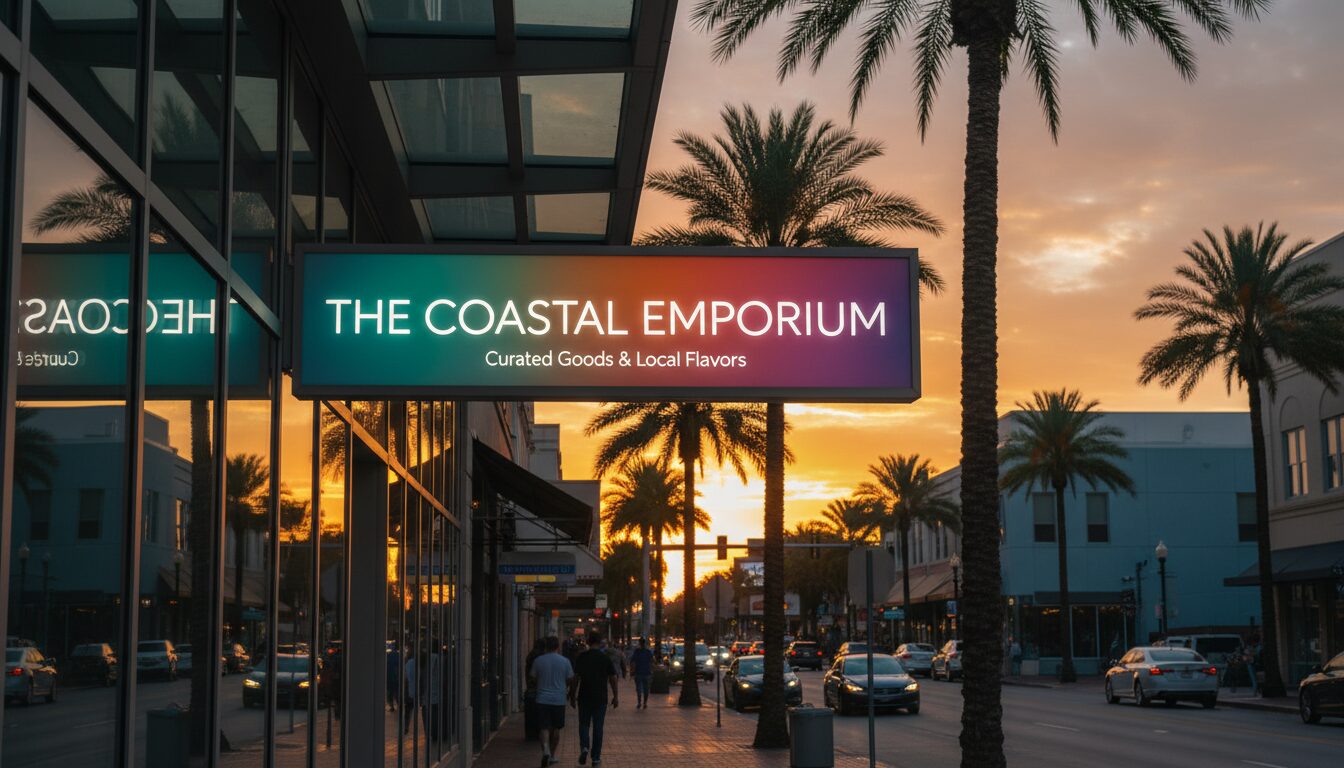
High contrast wins: Prioritize strong luminance contrast between letters and background so the sign remains readable in bright sun and at dusk.
-
Use accents strategically: Vibrant colors can pull attention to a logo or entry feature—but keep the main ID simple and readable.
-
Choose legible typefaces: Prefer geometric or humanist sans-serifs with open counters and consistent stroke width. Avoid overly condensed or decorative fonts for important copy.
-
Keep hierarchy clean: One primary message (brand/name) supported by fewer secondary elements performs better than multiple competing messages.
4) Lighting that improves visibility
-
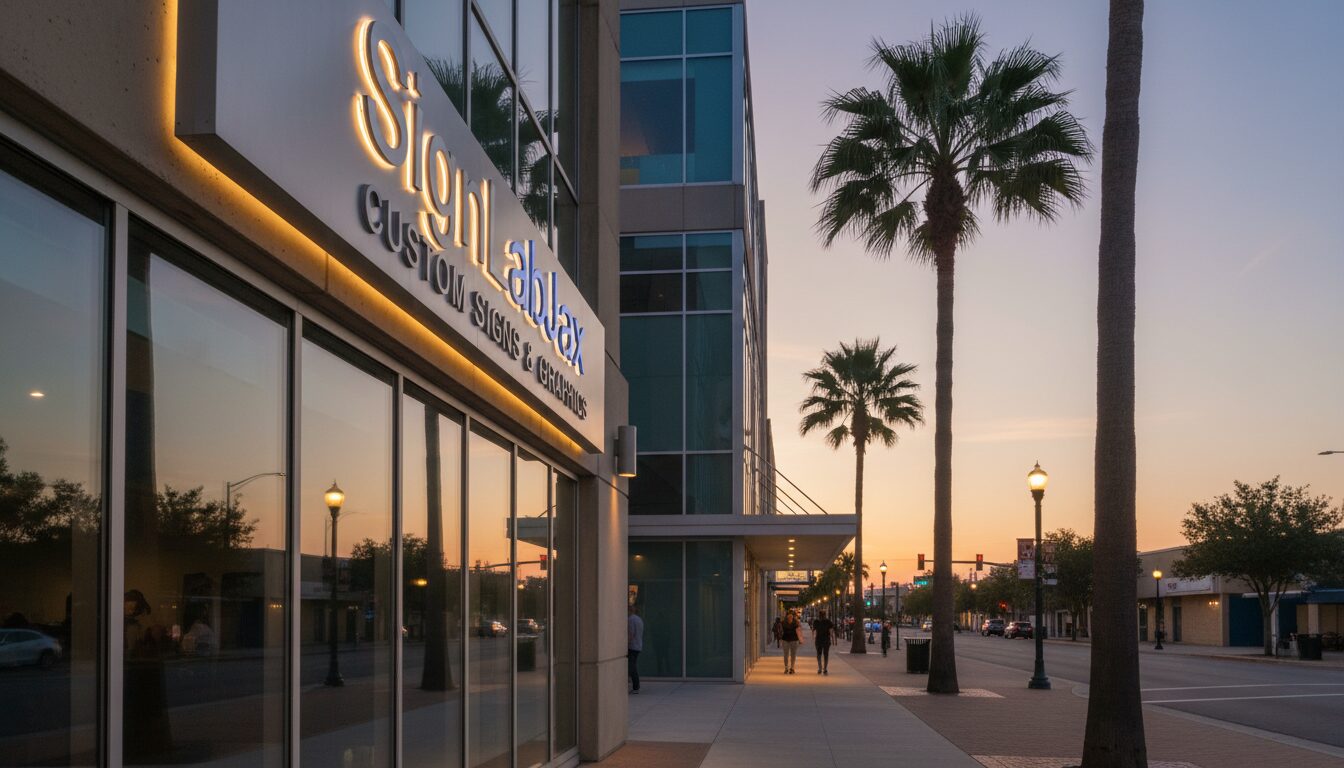
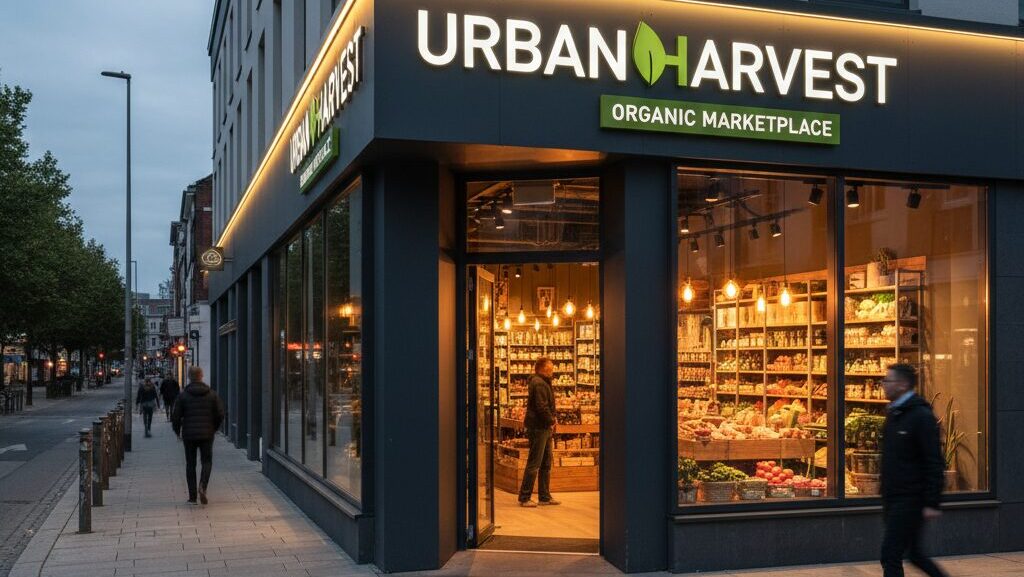
Even illumination matters: Avoid hotspots and uneven brightness. Uniformly lit letters read better and photograph more consistently for social and mapping thumbnails.
-
Check multiple ambient scenarios: Review the façade at peak daylight, dusk, and under street lighting. A sign that looks good at noon may fail at night.
-
Preserve contrast with the right color temperature: Choose lighting that doesn’t wash out the brand colors or reduce readability.
-
Prioritize serviceability: Lighting that’s easy to access and maintain keeps façade sign visibility consistent over time.
5) Materials and durability
Choose materials that protect contrast and appearance long-term:
-
UV-stable finishes to maintain color saturation.
-
Coated metals to reduce corrosion and fading.
-
Non-glare acrylics for dimensional letters to reduce reflections.
-
Robust mounting hardware rated for local wind loads and exposure.
Durability isn’t cosmetic—it’s part of visibility. A faded face or failing illumination reduces recognition and trust.
6) Quick implementation checklist
-
Map primary approach directions and pedestrian sightlines.
-
Define a primary ID zone on the façade and clear obstructions.
-
Select a high-contrast color palette and a legible typeface.
-
Specify even, serviceable lighting and verify power routing.
-
Choose durable materials and document mounting details for permits and installation.
-
[Reality Filter: verify locally] Check local zoning and sign permit requirements before fabrication.
Conclusion
Strong façade sign visibility starts with placement: align the primary sign with approach sightlines, amplify it with contrast and disciplined color choices, and maintain consistent performance through even lighting and durable materials. When customers can see it, read it, and trust it quickly, your storefront becomes easier to find—and easier to choose.
Call to Action
For a visibility-first façade plan and permit-ready design, request a consult with SignLabJAX.